


Key Takeaways
- Keep the ball close and look to turn into open space, rather than just moving away from a cone.
- Take a look around before you receive the ball so you know where the defender, your teammates, and any open space are.
- Start by learning simple cuts and dragbacks before moving on to more complex turning skills.
- Practice using both feet and try to speed up right after you turn.
- Decide how good your turn was by what you do next, like making a pass, dribbling, taking a shot, or keeping the ball safe.
Table of Contents
What Are Football Turns?
Football turns are moves that help you change direction while keeping the ball close. They let you escape pressure, make space, turn to face forward, look for a pass, or keep the ball until a teammate is ready.
Turns matter for every position and skill level. For example, a midfielder might turn between defenders, a winger can fake a cross and cut inside, a forward may pull the ball back while facing away from goal, and a defender can turn away from pressure instead of risking a bad pass.
Some turns are just simple ways to change direction and protect the ball or move into space. Others use body movement or a fake to trick the defender into thinking you will go one way, then you turn the other.
In our training, we ask three main questions: Did the player keep the ball safe? Did they move into a good space? Could they make the next play? A flashy turn that puts the ball near another defender is not useful.
What Are The Main Types Of Turns In Football?
The main types are cuts, sole-based turns, feint-based turns, and rotational turns. Which one you use depends on the defender’s position, how much space you have, your speed, and what you want to do next.
Players usually learn cuts first because they need fewer touches. Sole movements help you keep control in tight spaces. Feints trick the defender into thinking you will go one way, and rotational turns use your body to protect the ball as you change direction more sharply.
| Turn Type | Best Use | Main Coaching Point | Common Mistake |
|---|---|---|---|
| Inside or outside cut | Quick change into nearby space | Plant and push sharply | Touch travels too far |
| Cruyff turn | Defender expects a pass, cross or shot | Make the fake believable | No acceleration afterward |
| Dragback | Space ahead is blocked | Shield while pulling back | Ball gets trapped under the body |
| L-turn | Escape backward and sideways | Connect both touches smoothly | Exit goes toward the defender |
| Marseille turn | Defender commits from the front or side | Protect the ball throughout the spin | Starting without enough pressure |
At Murcia Football Academy, we prefer a player who can perform three turns at match speed over someone who knows ten but loses control under pressure. Reliability, timing and decision-making make the skill useful.
IMPROVE YOUR TECHNIQUE IN A PROFESSIONAL FOOTBALL ENVIRONMENT
At Murcia Football Academy, technical development is part of our daily training. Players work on ball control, turning, awareness and decision-making before applying those skills against defenders and in realistic game situations.
Apply to Murcia Football Academy
What Is A Cruyff Turn In Football?
A Cruyff turn is a clever way to change direction. Start by making it look like you are about to pass, cross, or shoot. Then, use the inside of your kicking foot to move the ball behind your standing leg and go the other way.
Johan Cruyff made this move famous when he used it against Sweden in the 1974 FIFA World Cup. FIFA explains that the key is the disguise: the defender gets ready for a cross, but Cruyff suddenly changes direction.
Here’s how to do it:
- Start by approaching the ball as if you are going to make a normal pass or cross.
- Place your supporting foot next to the ball, just a little ahead of it.
- Use the inside of your other foot to drag the ball behind your standing leg.
- Turn your hips and quickly move into the open space.
This move is often used by wide players. The most common mistake is focusing only on touching the ball. If you don’t use your eyes, shoulders, and kicking leg to sell the first move, the defender won’t be fooled.
How Do You Perform A Dragback Turn?
Put the sole of your foot on the ball, pull it back, and turn your hips so you can go the other way. Keep your knees bent and move your body across the defender’s path as you drag the ball back.
The dragback helps when your path is blocked or when you get the ball with your back to a defender and have already looked to see which side is safer.
Don’t pull the ball straight under your body, as this can make your feet get in the way and slow you down. Pull it just far enough to clear your standing foot but keep it close to protect it, then push the ball away from pressure with your next touch.
What situation are you facing when you need to turn?
How much space do you have to complete the turn?
Solution:
Use a dragback. Put your sole on the ball, pull it away from pressure, move your body between the defender and the ball, then accelerate into the safer space.
Solution:
Use an L-turn. Roll the ball back with your sole, hook it sideways with the inside of the same foot, and exit into space where you can pass, dribble, or accelerate.
How much space do you have to complete the turn?
Solution:
Use a Marseille turn when the defender is close enough to challenge. Drag the ball with one foot, use your body to protect it during the spin, complete the turn with the other foot, and accelerate away.
Solution:
Use a Cruyff turn when the defender expects a pass, cross, or shot. Sell the fake with your body, move the ball behind your standing leg with the inside of your foot, then change direction quickly into the open space.
How Do You Perform An L-Turn Or L-Drag?
The L-turn is a move that takes the ball back and then to the side. Start by rolling the ball back with the sole of one foot. Once the ball is past your body, use the inside of that same foot to hook it behind your standing leg and into open space.
Make sure the two touches flow together. Keep your balance over your supporting leg and let your hips turn as you move the ball.
Many players get the shape right but end up sending the second touch toward the defender. Before you start, pick your exit. Aim to finish with the ball in a spot where you can speed up, pass, or keep dribbling.
Why Is It Called The Marseille Turn?
The exact origin of the name is not fully documented. In France, people often call the move la roulette. Similar versions are known as the Marseille turn, Zidane turn, Maradona turn, 360, spin, or double dragback.
This skill existed before Zinedine Zidane, but his control made it closely linked to him. José Farías and Yves Mariot are often mentioned as early users in French football, and Diego Maradona also helped make it popular. Since names for football skills change from country to country, it is hard to say that one player invented it.
Here’s how to do the basic version:
- Start by dragging the ball back with the sole of your leading foot as you begin to turn.
- Turn so your back faces the defender to protect the ball.
- Then use the sole of your other foot to pull the ball as you complete the turn.
- Finish the move in control and speed up as you leave the defender behind.
This move works best when a defender is close enough to challenge you and there is space behind or beside them. Spinning when there is no pressure often adds risk without giving you an advantage.
How Do You Perform A Basic Turn In Soccer?
A basic turn has four steps: look, control, change direction, and escape.
Look for the defender and find open space. Keep your approach touch close, plant your supporting foot firmly, bend your knees, and lower your center of gravity. Move the ball with the surface you choose, then turn your hips and shoulders together.
The skill is not finished when the ball changes direction. It is finished when you escape pressure and are ready to act again. FIFA’s ball-manipulation session brings together close control, awareness, quick direction changes, and acceleration instead of working on them one at a time.
Your exit touch should send the ball into your running path. If you need several touches to get your balance back, the turn was likely too wide, too slow, or not timed well.
SEE WHICH PROGRAMME FITS YOUR DEVELOPMENT PLAN
Different players need different amounts of time to improve, adapt and compete. Compare our programme lengths, prices and what is included before choosing the option that suits your goals in Spain.
View programme options and pricing
How Can Players Improve Their Turning Skills?
Start at a slow pace so you can feel your foot position. Practice controlled repetitions with both your strong and weak foot, then add movement as you go into and out of the turn. Begin with your weaker foot so defenders cannot guess which way you will go.
Work through these five stages:
- No pressure: focus on learning the contact and body movement.
- Passive pressure: have a partner show an angle without trying to tackle.
- Guided opposition: let the defender challenge you, but only within certain rules.
- Live pressure: the defender decides the angle and timing of their challenge.
- Game practice: choose whether to turn, pass, protect the ball, or play it back.
The goal is to turn into open space that helps your team, not just to do the move itself. If your turn takes you toward another defender or blocks your next pass, it has not worked as intended.
Scanning should be included in your practice. A peer-reviewed study of 35 midfielders at UEFA Euro 2016 found that players who looked around more had slightly better pass completion and fewer turnovers. The effect was small, so scanning is just one part of good performance, not a guarantee. You can find the full study on PubMed Central.
At our academy, we sometimes put colored gates behind the receiver and change which exit is open before the pass arrives. This means the player has to check their shoulder, receive the ball, and react on the spot instead of planning the turn ahead of time.
We also give feedback after each move. A good repetition ends with a strong pass, a controlled dribble, or a quick burst of speed. This makes the practice more like what players will face in a real match.
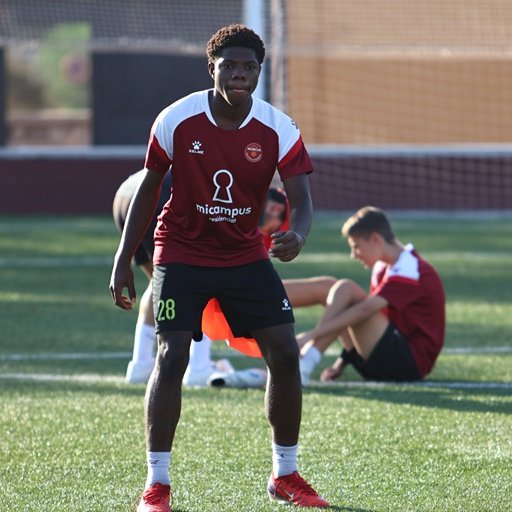
How Can A Turning Session Improve Technique?
A structured session helps players build control, coordination, balance, awareness, and confidence by making activities harder step by step. Players start by understanding the movement and then learn when to use it.
At Murcia Football Academy, we focus on technical development every day. In the first round, we usually avoid making too many corrections. This helps us see if the main issue is foot placement, body shape, scanning, confidence, or decision-making.
Next, we adjust the task. If a player needs more confidence, we might give them extra space or use less pressure. For stronger groups, we make the area smaller, limit touches, or have a defender come in from an unexpected angle.
The coach should check if the player looked around before getting the ball, protected it, moved into useful space, and stayed ready for what comes next. FIFA’s approach to receiving and turning in the center also moves from simple drills to more challenging game situations.
BUILD THE BALL CONTROL BEHIND A GOOD TURN
Turning becomes much easier when your first touch stays close and you are comfortable using both feet. Our ball-control guide explains practical drills and techniques you can use to improve these fundamentals.
Improve your ball control
What Should A Moderate Basic Turning Session Include?
A typical turning session lasts about 60 to 75 minutes. The exact length depends on the players’ age, skill level, and how much they have trained earlier in the week.
- Start with a 10-minute dynamic warm-up that includes mobility exercises, changes of direction, and gives each player a ball.
- Spend 10 minutes on unopposed turns, practicing inside cuts, outside cuts, and dragbacks with both feet.
- For the next 10 minutes, use cone-gate drills. Players turn at a marker and then accelerate through a new gate.
- In the following 15 minutes, introduce passive to active pressure. The defender starts by showing one side, then moves in to challenge.
- Next, spend 10 minutes on receiving and turning. Players scan the field, receive the ball at an angle, and play to a new target.
- Finish with a 15-minute small-sided game. Reward players for turns that lead to a forward pass, a dribble, or a goal.
Don’t rush the technical drills just to make the session more intense. It’s better to see six focused, quality repetitions than fifteen that are rushed and uncontrolled.
England Football’s turning-session resource also offers a helpful progression, moving from individual practice to 1v1, overload, and game-based situations.
Which Drills Are Best For Improving Turning Techniques?
The most effective drills let players repeat skills while still having to look, make decisions, and react.
Cone-box escape: Set up a square with four exit gates. The player goes in, turns near the center, and sprints out through a different gate. To make it harder, close one gate using a color or hand signal.
Scan, receive and play: Place a receiver between two targets. Before the pass comes, they look over both shoulders and decide to either turn or pass the ball back. Add a defender once the player is comfortable.
Narrow-channel one-versus-one: The attacker scores by dribbling over either end line. Since the defender can block one side, the attacker has to pick a cut, dragback, or feint instead of just repeating the same move.
Reaction turn: The player dribbles toward a marker. The coach calls out left, right, or back at the last moment. Move from voice to visual signals so the player has to look up.
Small-sided possession: Play 3v3, 4v4, or 5v5 with outside targets. Give an extra point when a player gets the ball under pressure, turns, and passes to a new target. FIFA’s breaking-lines session shows how scanning, body feints, first-touch direction, and facing opponents all work together.
From our experience, the narrow channel quickly shows player habits. Some always exit on their strong foot, while others start moving before the defender reacts. Playing against real opponents shows that timing matters more than how hard the move is.
How Should Players Progress From Basic Practice To Match Speed?>
Only increase your speed if you can still control the ball well. A good way to progress is to focus on technique, then add a signal, introduce pressure, make choices, and finally play in a game.
Start by moving at a walking pace, then try jogging as you turn. You can add a time limit or give the direction later. After that, practice with a passive defender who just controls the angle, and then with an active defender who tries to win the ball.
In the last stage, stop telling players which move to use. During a match, the best choice might be a Cruyff turn, a simple cut, a first-time pass, or not turning at all. FIFA’s central-turning session also suggests driving forward when there is space, but keeping the ball when pressure blocks the way.
You are ready for a match when you look around before getting the ball, hide your intentions, keep your balance, and finish with a good action. If you go fast without these details, you will just make mistakes more quickly.
UNDERSTAND WHAT COACHES LOOK FOR BEYOND THE SKILL
A clean turn can create space, but coaches also pay attention to awareness, timing, decision-making and what you do after the movement. See which qualities matter when your level is being assessed.
See what coaches look for in football tryouts