

Key Takeaways
- The most effective football conditioning drills focus on acceleration, slowing down, changing direction, repeated efforts, and playing well when tired. They go beyond just building general endurance.
- Longer interval runs are still useful, mainly during preseason or for extra fitness work. During the season, conditioning sessions are usually shorter, more intense, and more similar to actual games.
- Small-sided games, transition games, and passing drills can all improve fitness if the sessions are challenging enough. When planned well, ball work can be just as effective for conditioning.
- Strength training, plyometrics, good nutrition, enough sleep, and hamstring injury prevention all help players stay fit and available for football over the long term.
Table of Contents
Football Conditioning Drills
Football conditioning drills use exercises, games, and football-specific practices to help players build the physical skills they need on the field. For players, this means getting faster, more agile, able to sprint repeatedly, recover quickly, and stay sharp even when tired. For teams, it’s about pressing, regaining shape, and maintaining intensity throughout the match. Coaches want to prepare players for real game challenges, not just wear them out. No matter what we call it, football conditioning, conditioning for football, or football conditioning training, the goal is always the same: better fitness that makes a difference in matches. The best drills should improve acceleration, recovery, agility, and repeat sprint ability, not just leave players exhausted. Football conditioning sessions, stations, and circuits should all reflect real match situations, with movements, decisions, and actions that mirror the game.
What Should Effective Football Conditioning Look Like?
Effective football conditioning drills combine short, intense runs with agility exercises, quick turns, stops, recovery, and ball skills to reflect real game situations. Players rarely run at a steady pace for long periods. Instead, they speed up, slow down, change direction, recover, and repeat these actions while making decisions on the field. This is why interval sprints, short shuttle runs, and pattern running are usually more effective for football fitness than long, steady runs. Later in this guide, we will cover practical drills such as the 5-10-5 Shuttle, the Gut Buster, and diagonal sprint patterns.
| Main need | Best drill family | What you are really training | Practical example |
|---|---|---|---|
| First 5–10 metres | Short repeated sprints | Acceleration and intent | 10–15m sprint clusters |
| Brake and go again | T-drills, 5-10-5s, box drills | Deceleration and re-acceleration | COD patterns with strict body control |
| Repeat efforts late in the game | Sprint clusters and transition waves | Repeat sprint ability and recovery | 4–6 hard reps with controlled rest |
| Keep quality when tired | Passing circuits, rondos, target games | Technique and decisions under fatigue | Target-to-target possession |
| Match your position | Role-specific conditioning | Position-specific high-intensity actions | Full-back recovery runs, CB press-drop-recover |
| Stay available all season | Strength, plyos, hamstring work | Force, resilience, injury reduction | Jumps, split squats, Nordics |
Which High-Intensity Interval Drills Work Best For Soccer?
High-intensity interval drills are a great way to improve football conditioning because they let players repeat tough, game-like efforts with short breaks, similar to what happens in real matches. When used correctly, intervals can boost acceleration, anaerobic power, and the ability to sprint repeatedly, often more than steady running. Coaches should pay attention not only to picking a challenging drill, but also to how long each effort lasts, how much rest players get, and the total workload in the session. Interval-based conditioning is useful in pre-season, for keeping fitness up during the season, and when players are coming back from injury, as it helps rebuild match-level intensity in a controlled setting.
Train in a football environment where conditioning has a purpose
Serious players improve faster when the physical work is part of a real football week. Explore how our football trials in Spain are structured and how we help players train, compete, and get seen in the right environment.
football trials in Spain
How Do Short Sprints From 10 To 25 Yards Build Football Fitness?
Sprinting 10 to 25 yards is key for football conditioning because it builds the acceleration and power players use most in games. Since important plays usually happen over short distances, this kind of sprinting fits the sport. It helps players start faster, move with more power, and stay strong without getting tired quickly.
Coaches can set up 10 to 20 sprints with planned rest, adjusting the number of runs and rest time based on the player’s age, skill, and training goals. For speed and good technique, it’s better to do fewer sprints with longer rest. To build repeated-sprint ability and football fitness, more sprints with shorter rest periods work better.
These sprints are useful for both individual and team training. For a single player, they help someone get faster or improve if they get tired after several sprints. In team practices, coaches can add them to sprint groups, transition drills, or position-specific drills. Many high school football drills use this distance because it matches the quick, powerful moves that decide games.
Which Agility And Position-Based Drills Improve Football Conditioning?
Agility is not just about running quickly around cones. The FIFA Training Centre, in “Warren Young on the science of agility,” points out that changing direction and being agile are different skills. In football, true agility is about reacting to the ball, an opponent, or a teammate. This is why reaction time, footwork, movement technique, strength, and anticipation are all important parts of training. It also shows why general conditioning does not work for everyone. Defenders, midfielders, and forwards each have their own movement challenges during a match, so their training should fit those needs. Good agility drills help players get fitter and perform better because they teach them to stop, turn, speed up, and react under pressure in ways that matter in real games. The best way is to use drills that match the player’s actual role on the field.
Which Football Conditioning Workouts Build Stamina And Repeat Effort Ability?
Football conditioning drills and workouts are not the same. Drills are single activities, such as a transition game, target possession, or triangle passing. Workouts are full sessions that group these drills into blocks, circuits, or repeated sets. The best football conditioning workouts have a clear purpose, rather than just being tough for the sake of it. They should target things like repeat sprint ability, recovery between actions, or technique under fatigue. This is why the most effective sessions often feel like real football. FIFA’s speed and technical coordination training uses this approach, and sports science shows that small-sided games can improve both aerobic and anaerobic fitness.
When setting up a football conditioning workout, keep things simple with cones, clear distances, and timed intervals. For example, you can mark out a 20 by 25 meter area for transition drills, use 8 to 12 meter passes in a circuit, or plan repeated efforts of 15 to 20 seconds with rest in between. Resources like SoccerTutor’s preseason plans, Sports Session Planner’s endurance games, and Sportplan’s triangle drills can give you useful ideas. Adding competition can be helpful, but only if it encourages players to use good technique and stay safe. The main aim is to challenge players to work harder while still moving, thinking, and playing well.
Add sharper footwork to your conditioning plan
If you already have a base of speed and stamina, the next step is making your feet quicker and cleaner under pressure. Our ladder drills guide gives you extra warm-up and activation ideas you can layer into your football conditioning work.
football ladder drills
How Should Strength And Conditioning Drills Fit Into Football Training?
If your football conditioning plan consists only of cones and running, you’re leaving out important parts. Good strength and conditioning drills should help players get faster, tougher, and able to repeat efforts, not just wear them out. Players need to accelerate, handle contact, stop fast, change direction, and make powerful moves during a match. Strength training should support these football skills. Power and protection should go together with stamina and agility, because a player who can run but can’t produce force, keep good posture, or stay healthy isn’t really well conditioned.
That’s why adding sled work, plyometrics, and resisted movement can make running-based conditioning much better. Sleds and resisted sprints help players use force more effectively in quick, explosive moves. Plyometrics improve reactivity, stiffness, and elastic power. Strength training makes players more robust and helps them handle football’s repeated demands. Running still matters, but it should be just one part of a bigger plan.
Coaches should mix gym and field conditioning drills during the week. One session might focus on strength, resisted movement, or plyometrics in the gym. Another session can focus on sprinting, transitions, and field-specific conditioning. When these methods are well combined, players get faster and tougher, and can repeat high-intensity actions with high quality.
What is your main conditioning priority right now?
Do you need most of your conditioning work to happen with the ball?
Solution:
Focus on small-sided games, transition games, target possession, and sprint-and-finish circuits that force fast reactions, short accelerations, and quality execution under pressure. Add football ladder drills in your warm-up to sharpen footwork and coordination before the main work.
Solution:
Build your week around 10–20 metre sprint clusters, 5-10-5 shuttles, T-drills, deceleration patterns, and low-volume plyometrics with full quality. This is the best fit if you want cleaner acceleration mechanics, better braking, and stronger re-acceleration.
Do you need most of your conditioning work to happen with the ball?
Solution:
Prioritise game-based conditioning such as transition waves, possession games, passing circuits, and counter-attacking drills played at demanding tempos. This approach improves repeat-effort ability while keeping your scanning, decision-making, and technical quality relevant to real match situations.
Solution:
Use repeat-sprint blocks, interval-based shuttle work, controlled pre-season interval laps, and strength support such as split squats, jumps, and hamstring work. If you want a full-time setup where gym work, recovery, meals, and match exposure all support the same goal, explore our football trials in Spain and football academy pricing pages.
Which Plyometric Exercises Help Soccer Players Condition Explosively?
Plyometric exercises help soccer players build explosive power by teaching the body to produce force quickly and use elastic energy more effectively. Exercises like jumps, bounds, and quick ground contacts are key. Jumps build both vertical and horizontal power. Bounds help players generate more force during longer strides and faster runs. Quick contacts, such as hops or pogo jumps, improve stiffness, rhythm, and the ability to push off the ground quickly. This matters in football because players often need short bursts of speed, not just slow, heavy strength.
This is why plyometric training fits well into many football conditioning plans. It helps players accelerate, move more quickly, and take faster first steps by improving how fast they can apply force and change direction. Plyometrics also complement sprinting, strength training, and field drills because they help turn gym strength into real movement on the field. The most important thing is to keep the number of repetitions low and focus on doing each one well. Plyometrics should not become sloppy or just make players tired. A few focused sets of jumps, bounds, or quick contacts are usually much better than doing lots of reps with poor form and slow reactions. When done properly, plyometrics help players feel quicker, more alert, and more explosive during important moments in a match.
Which Pre-Season Conditioning Drills Push Fitness Fastest?
Pre-season is the best time to build a solid conditioning base because there is more room to increase training before matches begin. This phase is perfect for working on repeat sprint ability, recovery between efforts, and handling more high-intensity work each week. In football, players do much more than just one hard run. They need to accelerate, recover, press, transition, and repeat these actions over and over. Good pre-season conditioning drills, designed to match real game demands, prepare players for this instead of just wearing them out.
It is also important to increase training volume slowly. Pre-season is not about pushing players to the point of exhaustion from the start. Training should build up gradually so players can adapt, avoid injuries, and keep moving well. Harder drills, such as repeated sprints, shuttle runs, or tough transition circuits, can help when used wisely and with a clear goal. The goal is not to punish players, but to use harder sessions to build fitness faster while maintaining good technique, making smart choices, and prioritizing players’ safety.
Are Interval Laps Useful In Pre-Season Football?
Interval laps can be useful in pre-season football when there is a clear purpose. Harder laps help players build work capacity, recover better between efforts, and prepare for tougher conditioning. This is especially important early in pre-season, when the goal is to rebuild a base for repeated high-intensity work. The problem is not the laps themselves, but making them too generic. If players only run steady circles without changing pace, direction, or adding football actions, the benefits for real game performance drop off quickly.
That’s why we see interval laps as just one part of a full conditioning plan. They work best in pre-season when coaches make them more like football. You can mix up the pace with hard runs, easy runs, and recovery periods. You can also add changes in direction, like curves, shuttles, or turning points. At certain spots, players can do technical skills such as passing, first touch, or quick receiving before starting the next run. When used this way, interval laps help build pre-season fitness without becoming pointless running. They should prepare players for football, not take them away from it.
Which Game-Based Conditioning Formats Work Best In Football?
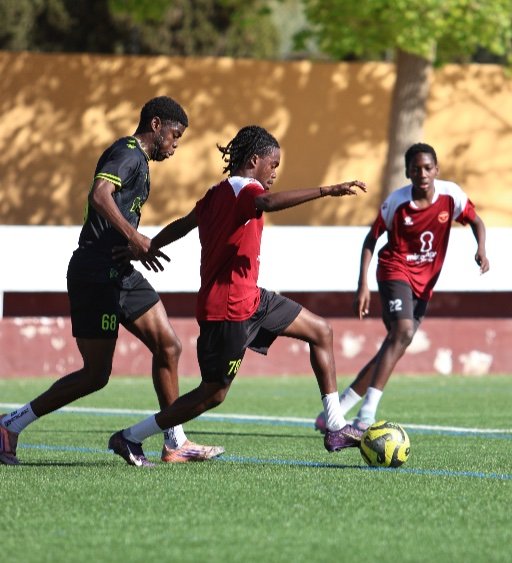
Game-based conditioning is often the most effective approach in football because it lets players build fitness while making decisions and using their skills. In these sessions, players scan the field, receive and pass the ball, press, recover, and react under pressure. This means the physical work is built into real football actions. Compared to just running, game-based conditioning is more relevant to match play. The movements are realistic, the decisions have meaning, and players stay motivated since they feel like they are truly playing football, not just running for fitness.
Coaches can adjust the training load by changing the number of players, field size, goals, and rules. Fewer players and smaller spaces create more pressure, more sprints, and force quicker decisions. Larger spaces encourage more high-speed running, recovery runs, and work during transition elements such as directional goals, neutral players, touch limits, special scoring, or counter-pressing, which can all affect how challenging and tactical the session becomes. At Murcia Football Academy, we use game-based training for these reasons. We want players to get fitter while also thinking, executing, competing, and performing in real football situations. This way, conditioning prepares them for match day, not just for hard training sessions.
Can Technical Drills With The Ball Still Count As Conditioning Work?
You can turn technical drills with the ball into conditioning work by carefully managing tempo, work time, and recovery. When players practice dribbling, passing, finishing, and support play at game speed, they build both skill and fitness. For example, endurance pass-and-receive drills, quick counter-attacks, and sprinting circuits with finishing all mix technical skills with fitness training. The key is to keep the quality high, even as players get tired. If technique or decision-making starts to slip, the drill stops being effective for football conditioning.

How Can Triangle Drills And Warm-Up Circuits Support Conditioning?
Triangle drills and warm-up circuits help players build rhythm, improve mobility, and manage their training load, all while staying active with the ball. These drills mix passing, control, movement, and light endurance in a single session, so they bridge the gap between technical work and harder conditioning. In a simple triangle drill, players pass, move, receive, open up, and repeat these actions. Warm-up circuits add short runs, turns, and coordinated footwork to slowly raise the heart rate, but still keep the focus on football skills.
That’s why these drills are a good way to begin before moving on to tougher football conditioning. They prepare players with repeated technical actions and coordinated movement, helping them find their timing, posture, and clean technique before the session gets harder. Even though these drills are not the most challenging part of training, they help players build sharpness, light endurance, and good movement before the more demanding work begins.
Understand what scouts actually look for physically
Conditioning only matters if it helps you perform when clubs are watching. Our scouting guide breaks down the physical, technical, tactical, and mental details scouts pay attention to.
how to get scouted in football soccer
Which Physical Qualities Matter Most In Football Conditioning?
Football conditioning is most effective when coaches know exactly which physical skill they want to improve. Speed, agility, stamina, endurance, strength, and power all matter, but each serves a different purpose. Speed and power support explosive moves, agility helps players change direction quickly, stamina and endurance keep them going and help with recovery, and strength is key for handling challenges, staying in control, and avoiding injuries. The best approach is to work on all these skills throughout the week, ensuring each session has a specific focus.
How Should Players Recover After Hard Soccer Conditioning Sessions?
Soccer conditioning only works if players recover well enough to adapt. Recovery and good nutrition help turn a hard session into real progress, not just tiredness. Drinking enough water keeps fluid levels balanced and supports energy, focus, and preparation for the next practice. Most repair and adaptation happen during sleep. Eating enough food gives players the energy and protein they need to recover. Light recovery activities, such as easy movement, stretching, or gentle ball work, can help players feel fresher without adding extra stress.
This is why poor recovery can ruin even the best football conditioning workout. A tough session by itself does not mean players will improve. Progress comes when the body can handle the training and come back ready for more. Good conditioning is not just about working hard. It is about making steady progress each week.
See what is included in a full-time academy setup
Players usually progress faster when training, gym work, recovery, meals, and match exposure all support the same goal. See what is included in our Murcia Football Academy program and pricing.
football academy pricing