

Key Takeaways
- Football ladder drills help athletes improve foot placement, rhythm, and body control during basic movements.
- Progress isn’t about finishing quickly. Instead, focus on doing clean reps, keeping a steady rhythm, and making fewer mistakes.
- You get the best results by choosing the right drill types, such as linear, lateral, crossover, turns, hopping, and reactive drills, and spreading them out over the week.
- Good ladder technique is important. Keep a tall, relaxed posture with your hips under your shoulders, eyes looking forward, arms active, and make quick, light steps under your hips.
- Keep your ladder warm-up short and focused on your goals.
- To get better at changing direction, focus on the transition. Start under control, move smoothly through the pattern, and finish with a real cut, burst, sprint, shuffle, or recovery move.
- Ladder drills are especially useful for building coordination and rhythm.
- Poor quality can ruin your ladder work. Common mistakes include looking down, slouching, landing with heavy feet, and rushing, which leads to sloppy movement.
Table of Contents
What Are Football Ladder Drills?
Football ladder drills are fast footwork exercises that use an agility ladder. They help players improve how they place their feet, keep a steady rhythm, and space their steps.
The ladder is not meant to make players faster. It serves as a visual guide, showing players where and when to step. This helps them step evenly, space their steps, and move with control.
With the right coaching, ladder drills help organize footwork, rhythm, and posture into simple patterns. They work well as a quick technical exercise.
Ladder drills will not make you faster or stronger on their own. For top speed and power, focus on sprinting, resisted runs, plyometrics, and strength training. Ladder drills are best for building better movement and coordination.
You can measure progress by looking for clean reps, a steady rhythm, fewer mistakes, and whether the player can keep their eyes up instead of watching the ladder.
What Are The Types Of Ladder Drills?
We organize ladder patterns into six main groups. The best choice depends on your training goals and the needs of the player you are coaching.
Linear (forward patterns)
These drills help players develop basic rhythm, posture, and foot placement for better acceleration. They work well for younger players, beginners, or anyone who needs to improve their basic movement.
Lateral (sideways patterns)
These patterns build hip control, side-to-side movement, and stability during defense. They are especially useful for defenders, full-backs, and midfielders who need to move quickly across the field.
Crossover (cross-steps / carioca-style)
These drills improve rotational control and coordination as players turn their hips and shoulders. They are best for players who want smoother movement when turning or recovering.
Rotational / turn patterns (90° / 180° turns)
These patterns teach players to turn their bodies quickly while staying balanced. They are great for anyone who needs faster transitions, better recovery runs, or improved change-of-direction skills.
Hopping / plyo patterns (two-leg, single-leg, hopscotch)
These drills focus on landing control, stiffness, and reactive strength when done with good coaching. They suit players who already have solid technique and are ready for more challenging exercises.
Reactive (callouts, visual signals, partner cues)
These drills train decision-making and make ladder work feel more like real football. They are best for advanced players, since the focus is on reacting under pressure, not just footwork.
Here’s how we balance these types throughout the week:
- Spend one day on linear and lateral drills to clean up technique.
- Use another day for crossover and turn drills to build change-of-direction skills.
- Dedicate a third day to reactive drills and exits to help transfer these skills into real football situations.
Here’s a simple rule to help you choose the right drills for your goals:
- If you want to improve movement and build confidence, start with linear and lateral drills.
- To get better at cutting and turning, add crossover and turn drills.
- For more transfer to real matches, include reactive cues and real exits in your training.
How Does Football Ladder Training Improve Movement Skills?
Effective ladder coaching focuses on improving rhythm, coordination, posture, and how steps are organized during controlled footwork drills.
Cadence and rhythm
Players learn to take quick steps and find the right tempo. This is important when speeding up, slowing down, or getting ready to receive the ball.
Stiffness and ankle strength
Quick foot contacts help players keep their ankles and feet active and stable, instead of letting them collapse. Ladder work alone will not build maximum lower-leg strength, but it can improve ankle function when used with strength and plyometric exercises.
Coordination under speed
Many players work hard, but they need better organization. The ladder gives instant feedback. If posture or timing is off, the pattern quickly falls apart.
Ladder drills can also help players improve how they slow down, if used the right way. What matters is not just the steps inside the ladder, but also what happens before and after. We teach players to approach the ladder under control, then finish with a real stop, cut, shuffle, or burst. This helps them practice shorter control steps, better balance, and cleaner body movement when slowing down.
Ladder drills also help players feel more confident with their footwork under pressure. When we add a callout, visual cue, partner reaction, or ball task, players learn to stay calm even when their feet have to move fast.
To help players use these skills in real games, we combine ladder drills with short sprints, slowing down and speeding up drills, cone cuts with good body angles, plyometrics, strength training, and football actions like passing, receiving, turning, and pressing.
Join Murcia Football Academy
Ready to take the next step in your football journey? Join Murcia Football Academy and train full-time in Spain with UEFA-licensed coaches while competing and showcasing yourself to Spanish clubs.
Join Murcia Football Academy
Best Ladder Drills For Football
The most important part of football ladder drills is moving your feet with control, speed, and precision. For us, ladder work is not just about rushing through patterns to look fast. Instead, it helps you develop rhythm, coordination, balance, and control over your body.
Keep this rule in mind: if we can’t do it clean, we don’t deserve to do it fast.
How To Choose Football Ladder Training Drills By Position And Role?
In football, you don’t need a completely different ladder drill for every position. Instead, adjust the starting position, the direction of the pattern, and what happens after the ladder based on each player’s role.
For wide players and attacking full-backs, focus on sharp hip movement, quick bursts of speed, and clean cuts. Defenders should practice moving sideways, turning from a backpedal, rotating their hips, and taking recovery steps. Central midfielders and playmakers need balanced footwork, scanning the field, and staying organized while reacting to cues. Ball-winning midfielders and defenders should work on moving sideways, taking short steps to slow down, and making controlled exits under pressure. For bigger players like centre-backs or target forwards, keep the drills simple, limit the volume, and focus on strong, quality movements followed by a powerful exit.
Adjust the starting position based on the player and the goal. The two-point start is most common since it matches a real football stance. A sideways start works well for defenders or anyone practicing shuffling, turning, or recovery moves. A lower, more aggressive start helps players work on their first step, but it should still look natural and fit the game.
To avoid a one-size-fits-all approach, keep the ladder pattern simple and adjust the entry, direction, volume, and especially the exit for each player. This way, the drill suits each player without making the session too complicated.
Explore Our Football Training Guides
Want to keep improving your game? Explore our football training guides for more practical drills, coaching tips, and player development advice.
Explore our football training guides
Ladder Drills For Agility And What Your Body Positions Should Look Like?
Agility ladder drills work best when you keep your body organized.
We focus on the basics: stand tall and relaxed, keep your hips under your shoulders, and look straight ahead. Avoid leaning back or looking down at the ladder. In football, always keep your posture athletic and controlled.
Arm movement matters as well. Your arms do more than just hang at your sides; they set your rhythm, help your balance, and keep your feet moving at the right speed. If your arms slow down or swing too wide, your footwork often gets sloppy too.
How your feet land is important too. Try to take quick, light steps directly under your hips instead of reaching forward. If your foot lands too far ahead, you lose rhythm and control. Good ladder work should look sharp, compact, and efficient.
When working on agility, we pay close attention to hips and body angles. Keep your hips steady, your shoulders stable, and make sure your body angle matches your movement. Good agility is not just about moving your feet quickly; it is about staying in control as you change direction.
Key coaching cues we use:
- Eyes up.
- Hips under.
- Quiet feet.
- Hands drive the rhythm.
- Match your angle to the movement.
How Do You Warm Up With An Agility Ladder?
The quality of your warm-up is important. Studies on structured football warm-up programs like FIFA 11+ show that good preparation is more than just raising your body temperature. It is also about getting your movements organized before you begin the main activity.
A ladder warm-up is meant to prepare you, not exhaust you. We like this method because it is quick, works for teams, and can be adapted for any group size.
Our warm-up begins gently and slowly becomes a little more challenging:
- Mobility and activation for the hips, ankles, and trunk,
- Low-intensity ladder patterns for clean rhythm,
- Optional low-impact hops if appropriate,
- Then one moderate pattern with an exit to wake up the nervous system before the main session.
Keep the ladder part of the warm-up brief and focused. The total warm-up time will vary depending on your session and team. For example, structured football warm-ups like FIFA 11+ usually take about 20 minutes and count as a full warm-up, not a separate workout.
Ladder Training With Patterns To Build Change Of Direction Skills
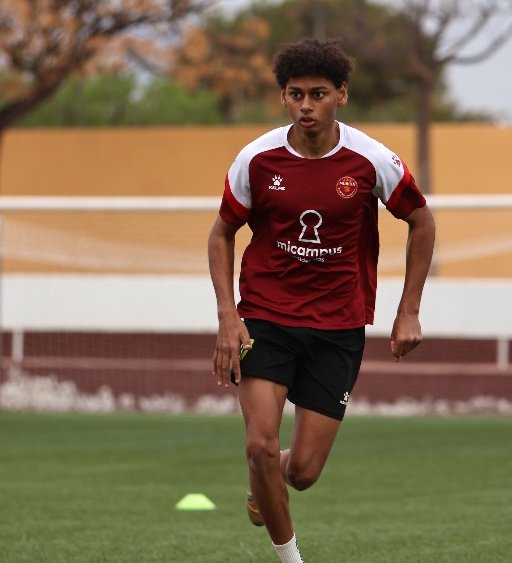
Ladder patterns won’t turn players into experts at changing direction right away, but they do help with two key skills: moving the feet quickly and controlling the hips. In short, players learn to step in the right spots and keep their hips steady as they change direction.
The most important part is the transition. We show players how to slow down before they step into the ladder so they stay in control, move smoothly through the pattern, and then speed up as soon as they finish, using a cut, burst, or sprint.
Some good examples are lateral patterns like in-in-out-out shuffles, crossover moves like carioca steps, and turns such as 90 or 180 degree exits. Once players get comfortable with the pattern, we add quick cues like left or right calls to make it feel more like a real game.
Ladder Footwork Drills To Train Foot Placement Under Pressure
When you’re under pressure, good foot placement means keeping your balance, staying steady, and making smart choices even if you’re focused on a ball, a teammate, or a signal. A steady base helps you land your feet in the right spots so you stay balanced, move quickly, and don’t overreach.
We add pressure in three ways: with a ball task like dribbling or receiving, with a partner cue like mirroring or chasing, and with a timing challenge where the player tries to beat the clock but still keeps good form.
This is how we change the drill:
For skill players, we add more reaction cues, include extra ball work, and encourage faster decisions.
For defenders, we use simpler patterns, reduce extra movement, and focus on good posture, steady foot placement, and a strong finish.
We keep the scoring simple to make sure everyone keeps their standards high:
- +1 point for a clean repetition
- 0 points if you hit the ladder, lose your posture, or rush the finish
- The first player to get 10 clean repetitions wins.
View Our Programme Prices
See our full programme options, what is included, and the pricing for each stay length so you can choose the right path for your football goals.
View our programme prices
Speed Ladder Drills And What Changes When The Goal Is Faster Feet
To move your feet faster, focus on spending less time on the ground and pumping your arms with energy. Try to take quick steps, lift your feet quickly, and keep your arms active to find your rhythm.
The main goal is to get faster without losing good form. When you do ladder drills, you should still look controlled even as you move quickly. If your posture breaks down, your feet go too far, or you lose the pattern, the drill is no longer helpful.
That’s why we use short sets, give time for full recovery, and slowly make the drills harder instead of doing long, exhausting sessions.
Here’s an easy rule to follow when the quality of your movement drops:
Stop the set if you hit the ladder, lose your rhythm, start reaching forward, or can’t keep the same quality for two reps in a row, because in 2026 coaches are placing even more value on clean movement quality and transfer to real football actions than on rushing through ladder patterns for show.
Combining Cones And Ladders In The Training Drills
Combining ladders and cones helps players the most because these drills look more like real football movements. The best setups have players move from the ladder to a cone cut, a sprint, or a backpedal or recovery move.
If you coach teams, make sure to watch spacing and flow. Set up clear lanes, stagger the groups, and let the next player start only when the exit area is clear. This keeps drills organized and avoids collisions.
Add partner cues such as pointing, calling out, mirroring, or chasing. This makes players react and make decisions, not just memorize the drill.
Coach players to enter the ladder in a controlled, organized way without rushing. As they exit, they should make one strong plant, keep a clear body angle, and quickly move into a cut, sprint, or backpedal.

What Should A Weekly Football Ladder Training Plan Include?
A solid weekly plan usually includes these key elements:
- One session focused on clean footwork,
- One session focused on change of direction,
- And one session focused on reactive transfer.
Be sure your plan matches your real schedule:
- Team training schedule,
- Gym work,
- Matches.
We keep our drill selection simple. Using too many patterns can lead to less progress.
We aim to master 3 to 5 patterns instead of trying to learn 20.
To see how we’re improving, we use:
- Quality scores (clean reps),
- And sometimes timed sets, but only when your form stays consistent.
Weekly ladder plan table (simple template)
| Day | Focus | Ladder work (8–12 min) | Transfer (6–10 min) | Quality standard |
|---|---|---|---|---|
| Day 1 | Footwork / rhythm | Drill #1 + #2 + #3 | 5–10m bursts, easy ball work | Eyes up, quiet feet |
| Day 2 | Change of direction mechanics | Drill #4 | 45°/90° cuts, reacceleration | Control entry, decisive exit |
| Day 3 | Reactive + game-like | Drill #5 + #7 | Partner chase, pass-receive, press & recover | No sloppy reps |
Here’s how we combine this with strength training and football practice:
- If players are doing heavy lower body lifts that day, keep the ladder drills short and focus on good technique.
- If there’s a match in 48 hours, use ladder drills as a warm-up, not to tire players out.
What is your main goal with football ladder drills right now?
What do you need most in your next session?
Solution:
Use an 8 to 12 minute ladder block built around 3 to 5 simple linear and lateral patterns. Coach eyes up, quiet feet, hips under shoulders, and only count clean reps so the session improves coordination instead of turning into sloppy cardio.
Solution:
Keep the ladder pattern simple, then add a ball task, partner cue, or visual callout at the exit. Finish with a short burst or pass-and-receive action so players keep their posture and rhythm while learning to stay composed under pressure.
What do you need most in your next session?
Solution:
Use crossover patterns plus 90° or 180° turn drills with controlled entries and decisive exits. Pair them with 45° or 90° cone cuts and 5 to 10 meter reaccelerations, and stop the set as soon as rhythm, posture, or foot placement breaks down.
Solution:
Use reactive ladder drills with left-right cues, mirror or chase pressure, and exits into sprint, shuffle, or backpedal. Keep sets short with full recovery so players train real change-of-direction decisions and transitions instead of just rushing through the ladder.
Do Ladder Drills Actually Help?
Ladder drills can be useful, but it is important to understand what they are best for. They mostly help with coordination, rhythm, and foot speed in basic patterns. Some coaches overstate how much these drills help with real football skills. At this point, there is not enough proof that ladder drills alone improve football performance. One systematic review found only five good randomized studies and said it is too soon to make strong claims about agility ladders improving agility or other physical skills, since the research is limited and the training methods are not always clear.
Football coaches should keep this in mind. In one randomized study with youth soccer players, six weeks of agility ladder training did not lead to better results than the control group for agility, dribbling speed, slalom dribbling, or sprinting. In short, using ladder drills alone did not bring the improvements most coaches want.
However, this does not mean ladder drills have no value. Their benefits are just more focused. There is stronger evidence for using ladder drills along with other types of training instead of by themselves. For example, in young female volleyball players, combining agility ladder drills with multidirectional speed training improved their ability to change direction, and this approach worked better than regular volleyball training alone.
At Murcia Football Academy, we use ladder drills mainly to quickly build coordination, not as a complete answer for performance. We focus on rhythm, posture, and footwork, then add movements like exits, cuts, accelerations, decelerations, and game-like reactions. This helps the footwork transfer better to real football situations. That is the difference between just looking fast in a ladder drill and actually moving well in a match.
What Are Common Football Ladder Drill Mistakes?
These are the most common ladder mistakes we notice, why they matter, and how we fix them.
Looking down
When players look down, they start to depend on the boxes instead of learning to move with their eyes up.
To help, give players something to focus on ahead and remind them, “Eyes up.” Slow down the pattern if needed.
Collapsing posture
If the hips move back and the chest drops, the movement becomes heavy. This doesn’t translate well to football actions.
To fix this, remind players to keep a “Tall posture” and “Hips under shoulders.” You can also shorten the set or make the pattern easier.
Heavy, loud feet
If players stomp, it often means their rhythm is off, they’re too tense, or their foot placement isn’t right.
To help, remind them to use “Quiet feet.” Ask for quick steps under the hips instead of reaching forward.
Rushing and getting sloppy
If players go too fast before mastering the pattern, they develop bad rhythm and habits.
To fix this, set a quality rule: if there are two messy reps in a row, stop, reset, and go back to an easier version.
No transfer after the ladder
Ladder drills are only useful if they connect to real football movements.
To help, finish each drill with an exit, such as a 5 to 10 meter sprint, a 45 or 90 degree cut, a backpedal to sprint, or a pass-and-receive action.
For teams, keep groups small, use only a few coaching cues, and make standards clear by scoring clean reps. Only send the next player when the exit area is clear.
Contact Us to Plan Your Football Pathway
Not sure which programme is right for you? Contact our team and we will help you choose the best option based on your level, goals, and visa situation.
Contact Murcia Football Academy