

Key Takeaways
- Plyometrics help footballers develop explosive power. This is key for sprinting, jumping, tackling, cutting, and making quick bursts of speed.
- The best plyometric exercises for football are not always the hardest. The right exercises should fit the player’s skill level and the movements they use in games.
- Controlling your landing matters as much as how high you jump. If a player cannot land safely, they should not try harder plyometric drills yet.
- It is better to do fewer, high-quality reps than to repeat exercises over and over. Plyometrics should feel powerful and sharp, not like a long, tiring workout.
- Football players should practice linear, lateral, and single-leg plyometrics. The sport involves diagonal runs, landing on one leg, pressing, and quick changes in direction.
Table of Contents
Plyometrics For Football
Plyometric exercises help football players build explosive power and generate force quickly. These movements improve skills such as sprinting, accelerating, jumping for headers, cutting, changing direction, pressing, shielding, tackling, and reacting to loose balls.
Football involves much more than running in a straight line. Players twist, turn, shift their balance, change direction, sprint repeatedly, and handle body contact. Because of this, plyometric training should include more than just vertical jumps.
Effective plyometric training for football includes jumps, hops, bounds, medicine ball throws, quick ground-contact drills, and movements to the side or at an angle.
Planning is important. Many players try to do too much too quickly. They keep jumping until they get tired, their knees start to give out, their landings become heavy, and the exercise is no longer effective. Plyometrics are not about doing as many reps as possible. The focus should be on good technique, explosive movement, and getting enough rest between sets.
These tips are useful for both soccer and American football players, but exercises should fit the sport and the position. For example, a soccer winger might need to work on repeated acceleration, slowing down, and moving sideways. An American football player may need more power for collisions and short, explosive bursts.
What Are Plyometric Exercises?
Plyometric exercises use fast, powerful movements that begin with a quick stretch and finish with a strong muscle contraction. This is called the stretch-shortening cycle.
Here are a few basic examples:
- Box jumps
- Broad jumps
- Tuck jumps
- Medicine ball throws
- Plyometric push-ups
- Skater jumps
- Hurdle hops
The goal is not just to jump higher. It is also to help you absorb force, change direction, and move more efficiently. In football, these skills matter when a player lands from a header, stops quickly, turns away from pressure, or sprints into open space.
What is your main goal with plyometric training for football?
How confident are you with your landing control right now?
Solution:
Use a power-focused plyometric plan with box jumps, broad jumps, jump squats, and short acceleration work. Keep the reps low, rest properly between sets, and focus on making every jump explosive and clean rather than turning the session into conditioning.
Solution:
Start with landing quality before chasing height or distance. Use snap-down landings, low box jumps, pogo jumps, and small hurdle hops. Progress only when you can land quietly, stay stable, and control your knees, hips, and posture.
How confident are you with your landing control right now?
Solution:
Build your programme around lateral and multidirectional plyometrics such as skater jumps, lateral bounds, diagonal jumps, and hurdle hops into acceleration. Focus on sticking the landing first, then gradually add faster reactions so the work connects better to pressing, defending, and changing direction in matches.
Solution:
Use controlled agility foundations before fast change-of-direction work. Start with lateral stick landings, small single-leg hops, low lateral box shuffles, and balance-focused drills. Once you can control your body position, progress to quicker skater jumps and reactive football movements.
What Are The Best Plyometric Exercises For Football Players?
The most effective plyometric exercises for football players help boost sprint speed, jumping skills, lateral quickness, coordination, and control when landing.
If you are new to plyometrics, begin with lower-intensity exercises like pogo jumps, small hurdle hops, snap-down landings, and low box jumps. Once your technique improves, you can move on to more advanced drills such as depth jumps, single-leg bounds, and loaded squat jumps.
At Murcia Football Academy, we always focus on the individual player. We consider factors like age, strength, injury history, weekly training, and match schedules. UEFA’s fitness competence framework also stresses the importance of adjusting training to each player’s physical development and managing training loads carefully.
| Exercise | Main Football Benefit | How We Would Coach It | Common Mistake |
|---|---|---|---|
| Box jumps | Vertical power and take-off | Jump fast, land tall, step down | Using a box that is too high |
| Broad jumps | Sprint starts and horizontal power | Strong arm drive, full hip extension, stable landing | Falling forward after landing |
| Single-leg hops | Balance, cutting and one-leg control | Start small, land quietly, control the knee | Progressing too quickly |
| Jump squats | Lower-body power | Move fast, keep alignment, land softly | Turning it into cardio |
| Skater jumps | Lateral explosiveness | Stick the landing before rebounding | Letting the knee collapse inward |
| Medicine ball throws | Upper-body and trunk power | Throw explosively with full body intent | Only using the arms |
WANT TO BUILD EXPLOSIVE FOOTBALL POWER IN A REAL ACADEMY ENVIRONMENT?
Plyometrics work best when every jump, hop and landing is coached with a clear football purpose. At Murcia Football Academy, we help players connect speed, power and movement quality to real match actions.
Train With Murcia Football Academy
Why Are Box Jumps Useful For Footballers?
Box jumps and front box jumps help footballers build vertical power and explosive hip extension. These skills are important for jumping to head the ball, pushing off quickly when accelerating, and strengthening the lower body.
Choose a box height that makes sense for your ability. Players should avoid landing in a deep squat, letting their knees collapse, or using poor posture. A good box jump means jumping with power, landing softly, and finishing in a strong, balanced position.
Box jumps are helpful because they reduce the impact when you land, compared to jumping high and landing on the ground. This makes them a good way to teach powerful take-offs without adding extra stress to the body.
How Do Broad Jumps Improve Football Power?
Broad jumps build horizontal force, which is important for sprint starts, tackles, and quick acceleration.
When coaching broad jumps, we focus on three main points:
- Strong arm drive
- Full hip extension
- A stable two-foot landing
Players should avoid jumping far and then stumbling forward. This shows they created force but could not control it. In football, this matters because acceleration is often followed by a touch, pass, duel, or quick change of direction.
Broad jumps are easy to track over time. If a player jumps farther and still lands cleanly, it’s a good sign their explosive power is improving.
When Should Football Players Use Single-Leg Hops?
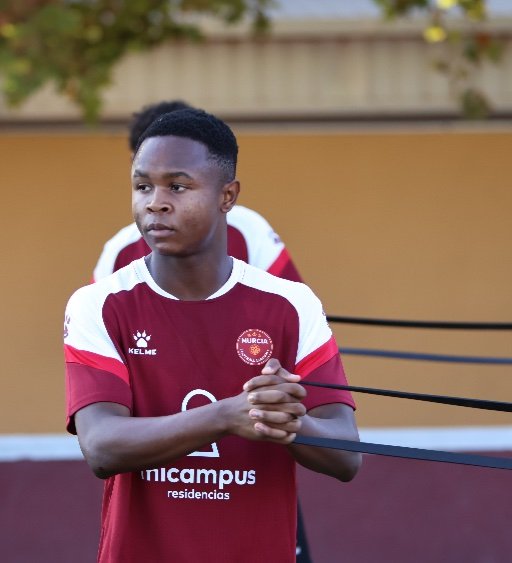
Single-leg hops help improve strength, balance, and control on one side of the body. This is important since many football moves use only one leg.
Players often sprint, change direction, jump, or land on just one leg. Practicing single-leg hops prepares them for these moments, but it is best to introduce these drills gradually.
These drills put extra stress on the ankle, knee, hip, and Achilles tendon. Players should learn proper landing technique first before trying repeated single-leg hops or longer jumps.
Should Footballers Do Jump Squats Or Barbell Squat Jumps?
Jump squats are great for building lower-body power in footballers, especially when you focus on control and speed.
Start with bodyweight jump squats first. Barbell squat jumps are harder and should only be done with proper coaching, safe weights, and good technique. If the bar slows you down, feels too heavy, or throws off your balance, it is not helping you train the right way.
When you add weight to plyometric exercises, make sure you never give up on these key points:
- Speed
- Landing quality
- Knee and hip alignment
- Posture
- Recovery between reps
Most young players should work on building power with bodyweight exercises and landing safely before trying to add extra weight.
Which Plyometric Drills Help Football Speed, Agility, And Change Of Direction?
To train speed plyometrics for football, work on quick ground contacts, powerful take-offs, moving sideways, and keeping your body under control.
Football speed is not just about running straight and fast. Players need to speed up, slow down, react, turn, and move again. FIFA’s Training Centre says speed technical coordination is about combining physical, technical, and team speed with movements that match the game.
That’s why change-of-direction plyometrics need both power and solid landing control. If a player can jump far but cannot stop quickly, they may struggle when the game gets intense.
Good drills should feel fast and explosive. If a player starts to look tired, slow, or heavy, the set probably went on too long.
How Do Skater Jumps Build Lateral Explosiveness?
Skater jumps help you build side-to-side power. They make it easier to shuffle on defense, press, dodge opponents, and get back into position.
Start by jumping sideways from one leg to the other, making sure to control your landing before moving again. At first, focus on “sticking” the landing. This means landing, holding your balance, and keeping your knee, hip, and torso steady.
As you get better, you can do the drill faster and react more quickly.
READY TO TEST YOUR SPEED, POWER AND FOOTBALL LEVEL IN SPAIN?
A strong first step matters more when you can show it in training, matches and trial situations. Our full-time programme helps players prepare through daily training and football trials in Spain.
Get Football Trials In Spain
What Do Scissor Jumps Train For Football Movement?
These drills help you get better at sprinting, lunging, and moving your lower body quickly. To do this exercise, begin in a split stance, jump up, switch your legs while in the air, and land in the opposite split stance.
Keep these main coaching tips in mind:
- Keep your torso upright.
- Land gently.
- Make sure your front knee stays stable.
- Take your time and focus on control before you try to go faster.
Why Are Jumps And Laterality Important In Football?
Footballers move in many directions, not just forward. They go sideways, diagonally, backwards, and shift across their bodies too.
That’s why laterality matters. Training both sides keeps players balanced and helps avoid obvious left-right weaknesses. Even right-footed players often push off their left leg to cut inside or defend.
With good coaching, lateral plyometrics can improve agility, balance, and how fast players can change direction.
Are Ladder And Obstacle Exercises Useful For Football Plyometric Drills?
Ladders and obstacles can be useful, but they should not be the only part of your speed training.
Ladder drills help with coordination, rhythm, body control, and foot placement. They are great for warm-ups and practicing foot speed. Still, if a player only does ladder drills, they may not develop enough power.
It’s better to mix ladder drills with more powerful plyometric exercises, like these:
- Do a quick ladder pattern, then go straight into a sprint.
- Try hurdle hops followed by an acceleration run.
- Do obstacle bounds and finish with a controlled landing.
- Move through the ladder, then go right into a reaction drill.
What Are Lateral Box Shuffles Good For?
Lateral box shuffles help players get better at moving side to side, controlling their hips, and using quick footwork.
This drill helps with defensive movement, pressing, jockeying, and reacting quickly when the direction changes. Keep the box low so players can move quickly and stay in control.
If the box is too high, players will move slowly instead of explosively. Rhythm matters in football, so the drill should feel quick and light.
How Should A Football Plyometric Workout Be Structured?
Begin each football plyometric workout with a thorough warm-up and movement preparation before moving on to the most explosive drills. This is important because plyometrics put a lot of stress on your ankles, knees, hips, and tendons. Make sure your body is ready before you start jumping, landing, bounding, or changing direction at high speed.
Do your most explosive exercises at the start of your session, when you have the most energy. This helps you move with better quality, keep good posture, land cleanly, and give full effort. If you wait until you are tired, your form can slip and the exercises won’t work as well.
A good football plyometric workout should have exercises with a clear purpose. To build vertical power, use box jumps, squat jumps, or tuck jumps. For horizontal power, broad jumps and bounds help with sprinting and quick starts. For lateral power, skater jumps, lateral bounds, and diagonal jumps are great for cutting, changing direction, and defense. To improve single-leg control, try single-leg hops and stick landings. You can also work on upper-body explosiveness with medicine ball throws or plyometric push-ups.
Most football players don’t need long workouts. Focus on doing fewer reps with full effort and take plenty of rest between sets, instead of doing lots of exercises. The goal isn’t to get tired, but to make every rep explosive, controlled, and useful for your football skills.
At Murcia Football Academy, our certified coaches use proven methods to help players grow. Plyometrics are included as part of a complete training program with football drills, strength training, match preparation, and recovery. Our UEFA Pro licensed coaches pay attention to how each player moves before increasing the difficulty, making sure training builds explosiveness safely and improves control over time.
What Rules Make Plyometric Training Safer And More Effective?
To stay safe when doing plyometric exercises, pay attention to landing well, build up your training slowly, use proper surfaces and shoes, and check that athletes are prepared.
These are the key rules to keep in mind:
- Warm up properly before explosive work
- Start with simple movements before advanced ones
- Keep reps low and focused
- Rest enough between sets
- Land softly and under control
- Avoid plyometrics when tired or in pain
- Use a safe surface and suitable football shoes
- Do not use plyometrics as punishment conditioning
Every jump should have a clear purpose, like building power, speed, agility, tendon strength, landing control, or coordination. If a coach cannot explain why a drill is being done, it might be time to try something else.
COMPARE THE FULL-TIME FOOTBALL ACADEMY OPTIONS
Before choosing an academy, it helps to understand what is included, how long you can join for and what kind of environment you will train in. See the Murcia Football Academy programme options before planning your next step.
View Academy Prices And Packages
What Are Common Plyometric Mistakes?
One of the biggest mistakes is doing too many jumps. Many players think that more jumps will make them stronger, but when you get tired, your jumps often get worse.
Here are some common mistakes people make with plyometrics:
- Choosing advanced exercises too early
- Landing with the knees collapsing inward
- Treating plyometrics like cardio
- Doing every drill at maximum speed without control
- Only training straight-line jumps
- Ignoring lateral and single-leg work
- Adding weights before mastering bodyweight technique
- Training plyometrics too close to a match without planning
In our sessions, we begin by working on quiet landings. If a landing is loud, it often means the player is not absorbing force well. We want players to land softly and be ready for their next football move.
What Are The Benefits Of Plyometrics In Soccer?
Plyometric exercises are useful for soccer players since the sport requires sprinting, jumping, quick turns, slowing down, and speeding up.
A good plyometric training program for soccer can help improve:
- First-step speed
- Jumping for headers
- Landing after duels
- Balance under pressure
- Change of direction
- Agility
- Sprint acceleration
- Kicking power
- Multidirectional movement
Studies show that well-planned plyometric training leads to good results. For example, a PLOS One review found that adolescent soccer players improved their jumping, sprinting, and ability to change direction. Another review in Frontiers in Physiology examined how plyometric training affects kicking performance.
These ideas can help all footballers, but the exercises should reflect the movements seen in a soccer game. This means including both straight-line and multi-directional drills, not just vertical jumps.
WANT TO BUILD A SMARTER FOOTBALL TRAINING WEEK?
Plyometrics are only one part of football conditioning. Learn how speed work, strength, fitness and recovery can fit together so your training feels more like the game.
Read Our Football Conditioning Guide