

Key Takeaways
- To succeed, you need to play at the right level, get enough exposure, and stay consistent.
- At trials, being ready for that week is more important than just showing potential.
- Scouts notice more than your skills. They watch your decisions, your effort, and how you help your team.
- There are rules about contracts and transfers. If you don’t know them, you might get stuck or misled.
Table of Contents
How To Go Pro In Soccer?
If you want to become a professional, you need to perform well in real matches and get noticed where clubs look for new players. The process is usually the same: build your skills, compete, get evaluated, go on trial, and then sign.
Here’s what you actually need to do:
- Play in real competitive matches, not just train.
- Work on building better habits every week so you can improve quickly.
- Make sure you play in leagues, academies, or events where scouts are already watching.
These are the most common paths we see:
- Join a professional club academy, move up from youth to reserve, and then aim for the first team.
- Attend private academies in countries that focus on football, where you can develop, go on trials, and build your network.
- Play college soccer, mainly in the US or Canada, then enter the draft, attend trials, or join lower leagues.
- Start in semi-pro or amateur leagues, stand out with your performances, and then earn trials and contracts.
- The best path for you depends on your age and where you live. Be prepared for months or even years of hard work, tough competition, and steady effort every week.
At Murcia Football Academy, we believe this is a real pathway, not just a dream. Our players train in the mornings, and when they reach the right level, we help them join Spanish club sessions and trials. We don’t promise a contract, but we do provide the right environment and honest feedback.
How Can You Become A Soccer Player If You Are Just Starting Out?
Start by getting coaching, joining organized matches, and creating a weekly routine you can follow for several months.
If you’re new to the game or starting later, avoid random drills and focus on these key areas:
- Practice your first touch and ball control with short sessions each day.
- Build your understanding of the game by working on positioning, scanning the field, and making simple decisions.
- Get as much playing time as possible, since nothing beats the experience of real games.
Your age mainly determines which teams or leagues you can join, such as school, university, amateur, or semi-pro squads. There isn’t a set age limit, what counts most is how fast you improve and how you perform in games.
To get started, join a local team or league and play every week. Keep track of your playing time and your contributions. When you’re regularly performing well, move up to a stronger team or league.
READY FOR A PROFESSIONAL TRAINING ENVIRONMENT?
If you’re serious about going pro, we can help you move from “training hard” to training with structure. Apply with your position and clips, and we’ll tell you if our pathway in Spain is a fit.
Apply to join
How Can You Play Professional Soccer For A Team?
Teams want players who play well in real matches, understand their role, and can be counted on when it matters.
At trials, clubs usually look for these qualities:
- Quick decision making, which means making simple choices fast
- Role discipline, or staying in your position instead of chasing the ball all game
- Physical readiness, like handling duels, doing repeat sprints, and recovering quickly between plays
- Coachability, which means showing you can use feedback right away
- Consistency, or playing well for the whole match instead of just one moment
During our trial weeks, the players who stand out are not always the flashiest. The ones who get noticed are those who do the basics quickly and keep it up throughout the whole game.
Here are some common mistakes we see during trials and help players fix:
- Trying too hard to impress instead of focusing on your role
- Forcing dribbles in the wrong areas, which often leads to losing the ball during transitions
- Showing poor body language when you get tired
Many players get confused about this. A trial is only an evaluation, while a contract is a legal agreement. A trial can open doors, but it does not guarantee you will get a contract.
The rules and logistics are different when you compare domestic and international pathways.
Domestic pathway: You trial and sign with clubs in your own country. The paperwork is simpler, registration is easier, and you can move between clubs more quickly.
International pathway: You move across borders, so eligibility, registration, visas or residency, and FIFA rules (especially for under-18s) become important. Timing and paperwork matter just as much as your performance.
If you are thinking about contracts, make sure to read the rules yourself. FIFA’s Regulations on the Status and Transfer of Players.
Is Being A Soccer Player A Long-Term Career Option?
Football can be a career, but there are no guarantees, and each level brings a different experience. Most players move through stages like development, getting their first senior minutes, earning a regular spot, reaching their peak, and eventually moving on. How long you play depends on your position, injuries, and the level you compete at. Above all, you need to prove yourself every season to keep your place.
Football income can vary widely. Top divisions may offer life-changing salaries, but lower leagues and semi-pro teams often pay only modest wages, match bonuses, or sometimes just cover your expenses. Contracts are usually short, and moving between levels can quickly change your income. This is why budgeting and planning matter as much as training.
Smart players start building options early, not after their last match. Getting coaching badges, learning video analysis, making scouting connections, working in strength and conditioning, or studying sports management can all lead to real careers. Even while you’re still playing, you can help with youth sessions, learn to analyze game film, shadow staff, and build a professional CV that doesn’t depend on your next contract.
GET A CLEAR PICTURE OF TRIALS IN SPAIN
Trials aren’t “one good game and you’re signed.” Learn what clubs evaluate, what documents matter, and how to avoid the mistakes that get talented players overlooked.
Read the Spain trials guide
How Hard Is It To Become A Professional Soccer Player?
It’s a tough situation since opportunities disappear quickly, and there are more skilled players than there are contracts available.
One way to understand the challenge is to look at the US system. NCAA data shows that only about 6.1% of high school boys soccer players go on to play at an NCAA school, and just 1.4% reach Division I.
These numbers highlight how tough the competition is. Usually, the reasons come down to a mix of barriers:
- Physical: being able to sprint over and over, win challenges, recover quickly, and stay effective late in games
- Technical: controlling the ball when under pressure, passing quickly and accurately, and finishing chances even when tired
- Mental: making good decisions quickly, bouncing back after mistakes, and staying consistent week after week
Age matters, but it’s not just about reaching a certain number. Players grow and learn at different rates. Some develop later physically or tactically. What matters most is your progress: are you improving faster than the level you want to reach, and can you turn your training into strong performances in real games against tougher teams?
How Do You Become A Famous Soccer Player Or Soccer Star?
Fame is about being noticed, but being professional is about how you play. You can compete at a professional level without being famous, and you can be popular online without having the skills for pro football.
Clubs trust what they can see for themselves: your performance in real league matches, against real opponents, and with coaches who can vouch for you. The media can help get your name out, but it doesn’t replace playing real games. Scouts find it easier to judge your skills in higher leagues because the competition is stronger and more reliable.
Social media works best when it shows the real you, not a fake version. Keep it simple and honest:
- Share videos that show your decisions, not just your skills. Include moments where you scan the field, handle pressure, pass, defend, and move between plays.
- Add context by sharing the level of competition, the date, and full-match details whenever possible.
- Be sure to include your position, age, height, club, and contact details.
- Treat your social media like a portfolio, not a shortcut. The best thing you can show is how you played in your latest match.
How Do Youth Academies And Clubs Help You Go Pro?
They help because they combine training, competition, and exposure all in one place.
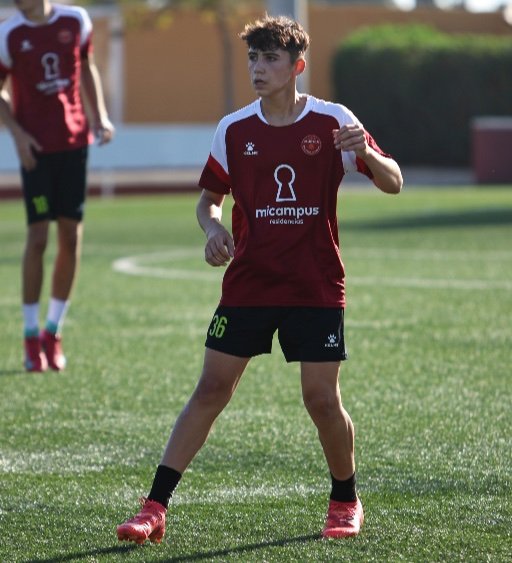
At Murcia Football Academy, we keep a professional routine with organized sessions, video reviews, and weekly feedback. Once a player is ready, we help them get noticed by Spanish clubs. If you are comparing academies, coaching is important. UEFA outlines the coaching licence pathway and minimum standards (C, B, A, Pro), so you can see what “qualified coaching” means in Europe.
Here’s a simple comparison of common pathways:
| Pathway | Best for | What you get | Main limitation |
|---|---|---|---|
| Professional club academy | players already near elite level | daily high-intensity training + club pathway | selection is strict |
| Private academy in Spain | international players seeking development + trials | structure, coaching, matches, trial exposure | requires relocation + commitment |
| College soccer | student-athletes (mainly US/Canada) | education + competitive football | season format differs from pro football |
| Semi-pro / amateur route | late developers with strong mentality | real men’s football experience | exposure depends on league level |
Is College Soccer A Good Path To Becoming Professional?
College is a good choice if you want to keep learning while developing as an athlete and as a person. In the US, the main college sports systems are the NCAA (Divisions I, II, and III), NAIA, and NJCAA for junior colleges. In other countries, universities have teams and leagues too, but these are usually less important for turning pro than the NCAA is in the US.
Deciding between college and an academy means looking at the advantages and disadvantages of each option.
- If you choose the academy path, you will train every day, get noticed by pro clubs earlier, and face tougher competition sooner. This can lead to great opportunities, but there is less security if things do not work out.
- The college path gives you organized training and games while you earn a degree. Progress might be slower and follow the school season, but you have more time and a backup plan for your future.
If you develop later, want a degree, or need more structure before trying out for pro teams, college can offer a better balance. You keep improving as a player without putting your whole future on one contract.
How Do Soccer Players Get Scouted And Gain Exposure?
Scouts will notice you if you perform well where they are already watching and make it simple for them to see what you can do.
Where scouts usually find players:
- Competitive leagues and academy matches (they trust the level)
- Tournaments/showcases they already attend
- Recommendations from coaches they already trust
Networking matters because most chances come from people who trust you. Be dependable, communicate clearly, and build strong relationships with coaches. Often, a good reference will get you a trial faster than any highlight video.
What to keep ready (so you can act fast when an opportunity comes):
- 1-page football CV (position, height, dominant foot, club history, contact)
- 3–5 minute highlight video (no slow motion, no music, no 12-minute montage)
- Full-match footage when possible (even if it’s only one match)
- A short message template that sounds professional
Simple message template (copy/paste style):
Hi Coach/Scout, my name is ____. I play ____ (position) and I’m looking for trials/opportunities in ____. Here is my CV and video. If you’d like a full match, I can send it. Thank you for your time.
What Physical Fitness Level Is Required For Professional Soccer?
In professional football, success comes from making high-effort plays over and over, not just running. Studies from the German Bundesliga show that both your position and your personal traits shape how you perform physically.
To play well, you need endurance to keep going, speed for repeated sprints, and strength to win challenges. If you only work on one area, you may have weaknesses during the game.
- You have to sprint, recover, and then sprint again. This ability to repeat sprints is essential.
- Having good aerobic fitness helps you stay alert and perform well even late in the game, not just at the beginning.
- Strength and power help you win one-on-one battles, and you also need good balance in your legs, core, and upper body.
- It’s also important to work on mobility and prevent injuries, especially in your ankles, hips, hamstrings, and groin.
- Good recovery habits, such as sleeping enough, drinking plenty of water, and eating well, really matter.
We often see that players who only train by running long distances get fit, but still struggle with the fast pace of a real match. Your training should get you ready for the specific demands of football.
CREATE A SCOUT-READY PROFILE
Your ability matters, but so does how you present it. Use our guide to build a simple football CV, a clean highlight video, and a message template that sounds professional.
Read the scouting guide
How Do Players Balance Education And A Soccer Career?
Balance starts with having a plan. Make a weekly schedule, avoid wasting time, and talk honestly about what matters most. It’s important to have a backup plan because football can be unpredictable. Always keep another option open while you train, like finishing school, earning a degree, getting coaching licences, or learning a trade, so your future doesn’t depend on just one chance. Managing your time is hard since travel, recovery, gym, and match days can take away from your study hours. That’s why you need to set aside time for studying and make sure you get enough sleep. For the long term, think in seasons. Set goals for the next three to six months in both football (like minutes played, level, or fitness targets) and education (such as credits or exams), and check your progress each month to keep moving forward in both areas.
How Do Consistent Performances Increase Professional Visibility?
Scouts and coaches want players they can rely on, not just those who make flashy plays. A big moment might catch their eye, but being dependable gets you more time on the field because it matters every play.
Coaches trust players who do the basics well. This means checking your surroundings before you get the ball, making smart choices under pressure, hustling back on defense, talking to your teammates, and recovering quickly after mistakes instead of giving up.
Clubs are always looking at your performance over time. They judge you across many practices and games. Can you keep making good decisions, play well even when tired, and stay reliable week after week, not just for a few moments when everyone is watching?
SEE PROGRAMME OPTIONS AND WHAT’S INCLUDED
A one-month stay and a full season solve different problems. Compare durations, what’s included, and choose what matches your goal: development, trials, or both.
View pricing