
Key Takeaways
- In 11v11 games, the goal stands 8 feet (2.44 meters) tall, measured up to the bottom of the crossbar.
- An 11v11 goal is 24 feet (7.32 meters) wide, measured from the inside edges of the posts.
- Goals for 7v7 games are smaller. Most leagues use goals that are 6.5 feet (2 meters) by 12 feet (3.6 meters), though some allow sizes up to 6.5 feet by 18.5 feet.
- Futsal goals are 9.8 feet (3 meters) wide and 6.5 feet (2 meters) tall.
- A common mistake when buying a goal is measuring from the outside of the posts instead of the inside.
Table of Contents
How Tall Is A Soccer Goal?
When people ask, “how tall is a soccer goal?” They usually mean the height of the crossbar.
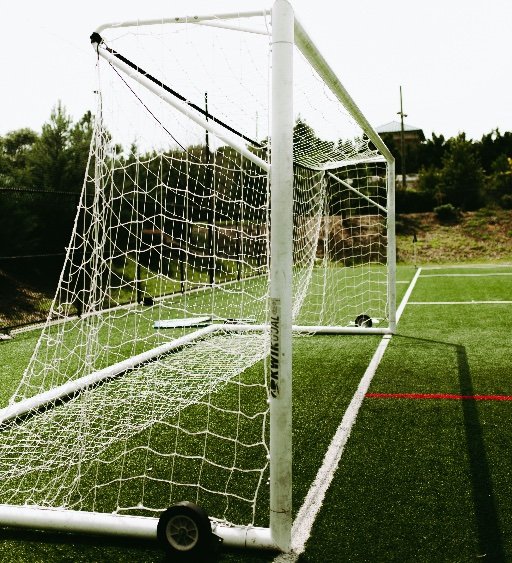
In 11v11 soccer, the goal is 8 feet (2.44 meters) tall from the ground to the bottom of the crossbar. This is the official size and covers the posts and crossbar, but not the net or how deep the goal is.
Goal sizes vary depending on the level and type of soccer, such as adult, youth, futsal, or beach soccer, so you might see different measurements. Most official games use standard sizes, but portable or training goals can be off if the frame isn’t level. In our experience, mistakes often happen with the “lower edge” measurement. Sometimes we get to a field, and the goal looks fine, but one side of the crossbar is slightly higher. This can throw off goalkeepers’ judgment of top-corner shots and strikers’ aiming. That’s why the referees always check the height before games.
How Wide Is A Soccer Goal?
Standard width (11v11)
A regulation 11v11 soccer goal is 8 yards wide, which is 24 feet or 7.32 meters. This measurement is taken from the inside of one post to the inside of the other. For comparison, that’s about as wide as a typical two-car garage door.
Why width matters
The width of the goal changes shooting angles, affects where goalkeepers position themselves, and influences how the game is played on fields of different sizes.
Different levels, similar proportions
Youth, futsal, and beach soccer goals are usually smaller, but they are designed to keep the same angles and proportions as the standard goal.
Quick measuring checklist
- Width: Measure from the inside edge of one post to the inside edge of the other, not from the outside edges.
- Height: Measure from the ground up to the bottom edge of the crossbar, not to the top of it.
- Square check: Make sure the diagonals across the goal opening are the same length.
- Safety: Always anchor or secure the goal so it does not tip over.
WANT TO TRAIN WITH REGULATION EQUIPMENT IN SPAIN?
The small details matter, goal height, width, and the finishing angles you see every day. At Murcia Football Academy, we train in a professional environment built around real match conditions, so players arrive at trials feeling prepared.
Explore our football academy programmes
How Are Soccer Goals Measured?
Here’s a quick checklist to help you.
Tools: tape measure + a small level (or a level app), and a flat surface if possible.
Measure the opening, not the outer frame.
- For width, measure from the inside of one post to the inside of the other.
- For height, measure from the ground up to the lower edge of the crossbar.
- Check that the goal is square.
- Measure both diagonals of the opening. If they are the same length, the goal is square.
Verify it’s set correctly:
- Check that the crossbar is level using a level, or step back and make sure it isn’t tilted.
- Make sure the posts are vertical by checking with a level against each post.
- Anchored/secured so it cannot tip.
Here are some common measuring mistakes:
- Measuring the outside of the posts, this will make your net not fit.
- Measuring to the top of the crossbar instead of the underside.
- Forgetting that the ground might not be level, which can cause one post to sink and the bar to tilt.
- Ignoring safety, an unanchored goal is a risk, even during casual training.
What Is The Standard Size Of A Soccer Goal?
The term “standard” usually means the full-size goal used in adult leagues and most full-field games, also called the adult or senior 11v11 goal.
Most people mean the standard 11v11 goal when they talk about goal size. It measures:
- 24 ft wide × 8 ft tall
- 7.32 meters wide × 2.44 meters tall
The width is measured from the inside of one post to the inside of the other. The height is measured from the ground up to the bottom of the crossbar.
Keeping the goal size consistent is important because it makes the game fair. Everyone aims for the same target, and it helps players build skills in finishing, crossing, and goalkeeping that transfer from practice to real matches.
If you want to learn and practice these details correctly, you can do that every day at Murcia Football Academy. We use real field dimensions and real game conditions, not just rough setups.
Quick reference table: common goal sizes:
| Game format | Typical age / level | Goal size (H x W) | Key note |
|---|---|---|---|
| 11v11 | U14+ / adult / pro | 8 ft x 24 ft (2.44 m x 7.32 m) | Regulation “full-size”. (ncaorg.s3.amazonaws.com) |
| High school / college | School competition | 8 ft x 24 ft | Same size in NCAA rules. (ncaorg.s3.amazonaws.com) |
| 9v9 | Often U11–U12 | Up to 7 ft x 21 ft | League-dependent. (AYSO Volunteers) |
| 7v7 | Often U9–U10 | 6.5 ft x 12 ft (recommended) | Some leagues allow up to 6.5 ft x 18.5 ft. (Cal South) |
| 4v4 | Often U6–U8 | 4 ft x 6 ft (max) | Frequently pop-up goals. (wiki.ayso.org) |
| Futsal | Indoor futsal | 2 m x 3 m | Inside measurement. (digitalhub.fifa.com) |
| Beach soccer | Beach soccer | 2.2 m x 5.5 m | Posts/crossbar are 10 cm; goals must be secured. (digitalhub.fifa.com) |
How Big Is A High School Soccer Goal?
Most high school matches are played on a full field with 11 players on each team and full-size goals that are 8 feet tall and 24 feet wide. Still, the exact requirements can vary based on your state association, federation rules, or competition regulations.
Coaches and administrators should check their state or association rulebook and think about any facility limitations, like multi-use fields, space behind the end lines, or using portable goals. On school fields, it is important to anchor portable frames securely.
While the goals stay the same, matches can play out differently.
READY TO APPLY FOR A PLACE AT OUR ACADEMY?
Structured training beats random sessions, especially if you want to improve finishing, decision-making, and match confidence. Complete our registration form and we’ll come back to you with next steps.
Start your registration
How Big Is A Soccer Goal In Meters?
In 11v11 soccer, the official goal is 7.32 meters wide and 2.44 meters tall. Most countries and FIFA use metric measurements, so you’ll usually see sizes listed this way.
If you’re ordering nets or replacing parts, avoid rounding the measurements too much. Even a few centimeters can mean the difference between a good fit and a net that sags.
How Big Is A Soccer Goal In Feet?
For 11v11 soccer, the standard goal size is 24 feet wide by 8 feet high.
Quick conversion: 8 yards equals 24 feet. For metric, 8 feet is about 2.44 meters and 24 feet is about 7.32 meters.
In the U.S., most product listings use feet, but the official measurements are taken from the inside of one post to the inside of the other, and from the ground to the bottom of the crossbar.
Buying tip: Always check if a listing gives the frame size or the opening size. You need the opening size to make sure nets and equipment fit correctly.
How Tall Is A Soccer Net?
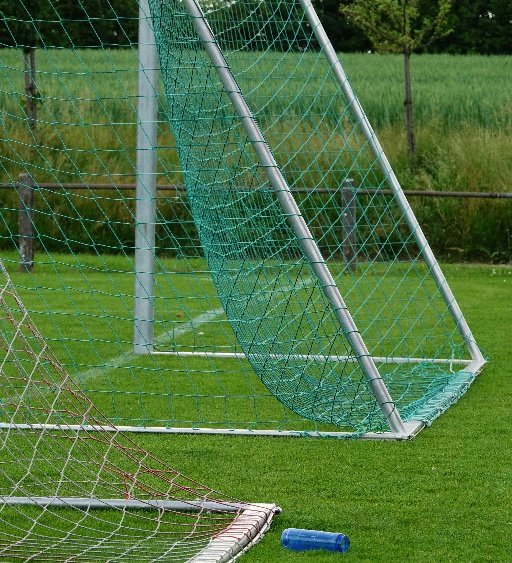
The net is designed to fit the goal, but it does not set the size of the opening.
A full-size (11v11) net fits an 8-foot or 2.44 meter high goal. Hang the net from the crossbar and posts, then use clips or hooks to attach it to the back supports so it keeps its shape.
If the net sags, the goal can look shorter and players might see the top corners differently. This is why you should keep the net tight.
Tip: Check that the bottom of the net touches the ground and is fastened, so the ball cannot slip under or through any gaps.
The depth of the net depends on the type of goal, like box, continental, or stanchion styles. Always choose nets made for your goal’s frame. Indoor and futsal nets are different because their frames are smaller, so a full-size outdoor net will not fit right.
How Big Are Soccer Goal Posts?
The phrase “goal post size” can mean a few different things.
- It can refer to the height, which is how far the crossbar is from the ground,
- The thickness or diameter, which means the width or depth of the posts and crossbar, and
- The profile or material, such as whether the posts are round, square, or elliptical, and what they are made of, usually aluminum or steel.
The main idea is that the posts and crossbar form the opening that players aim for. Rules set standards for the shape and size of posts to keep the target consistent and fair, and to ensure the goal is safe and easy to see. Clear edges help avoid arguments about whether the ball crossed the line, and white goal frames usually provide better contrast.
For example, the Laws of the Game state that the width or depth of the posts and crossbar cannot exceed 12 cm. Some school or college rulebooks may have their own size requirements.
When installing a goal, whether it is fixed or portable, make sure the posts are stable and securely anchored to prevent tipping. This is especially important in the fields of training and education.
If you are buying goals for a club or school, check that the model meets recognized performance and safety standards. FIFA’s Quality Programme for football goals can help you feel more confident in your choice.
CHECK PROGRAM DATES AND FEES BEFORE YOU COMMIT
Short trial or longer programme, you should know what’s included. Review our pricing and get a clear view of training, support, and accommodation options in Murcia.
View pricing and what’s included
What Size Is A 7v7 Goal?
In 7v7 soccer, both the field and the goals are smaller than in a typical 11v11 game. Here is what you can expect for a typical 7v7 setup:
- Recommended goal size: 6.5 feet high by 12 feet wide.
- Maximum goal size is usually 6.5 feet high by 18.5 feet wide.
Different leagues may use different goal sizes, so many provide a chart by age group. Be sure to check your competition’s rules.
We pay close attention to goal size in player development because the right size helps players finish well and lets goalkeepers build real skills. The goal should not be so big that every shot goes in, or so small that players stop trying. If you are not sure, match the goal size to the field and follow your competition’s rulebook.
How Tall Is A Crossbar?
Crossbar height is the distance from the ground up to the bottom edge of the goal’s crossbar.
Typical crossbar heights are 8 feet (2.44 meters) for 11v11 goals, 2.00 meters for futsal, and 2.20 meters for beach soccer.
The height of the crossbar matters because it affects how players shoot. Chips need enough space to drop under the bar, driven shots have less room to score, and aiming for the top corners is more difficult.
Always check that the goal is level. Even a slight tilt in the crossbar can make shots appear in or out and feel unfair. For safety, make sure the crossbar is firmly attached and does not move or wobble.
How Do Ball & Goal Sizes Work Together In Training And Match Play?
In youth football, both the goal size and ball size are changed as players get older. This helps match their strength, skills, and keeps the game safe.
This is a typical way the equipment changes as players grow:
- Younger players use smaller goals and a size 3 ball.
- Middle age groups play with medium goals and a size 4 ball.
- Older youth and adults use full-size goals and a size 5 ball.
Changing the equipment like this helps players grow. It teaches good shooting habits, helps goalkeepers learn how to handle the ball and position themselves, and builds confidence because the challenge is right for their age.
If the equipment isn’t right for the players, you might see shots that are too strong, goalkeepers using bad form, and less fun because the sessions get messy instead of helpful.
At our academy, when players move up, we keep things simple. We practice finishing in two steps: first on a smaller goal to work on technique, then on a full-size goal to practice real angles and goalkeeper movement.