
Key Takeaways
- The right academy for you depends on your goal. If you want a contract, a scholarship, personal growth, or just experience, each goal calls for a different approach. Here’s what you should know about football academies in Spain.
- Club academies are the hardest to join because they usually pick players through scouting instead of accepting those who pay to join.
- Private high-performance academies are usually the best choice for international players, especially if you need games, support, and quick exposure.
- Boarding academies are a good choice only if they provide strong education and a safe environment. For younger players, having a solid routine matters more than fancy facilities.
- If an academy can’t explain its development plan clearly in one minute, it probably doesn’t have a real plan.
Table of Contents
Best Football Academy In Spain
The best football academy in Spain is the one that fits your goals, gives you consistent coaching, real competitive matches and a path you can actually follow.
That’s why we don’t just give a single answer. Instead we think about what “best” means based on the results players actually want:
- Professional pathway / contracts (development + exposure + trials)
- Scholarships / education balance (football + academics done properly)
- Long term player development (technical + tactical)
- Short term improvement (fast progress)
Club owned academies vs private high performance (what’s the real difference?)
Club academies focus on developing players for their own teams. They are often excellent, but joining them isn’t easy. If you’re not already on their radar, getting in can be very tough.
Private high performance academies are set up to give players a structured, professional environment if they need:
- A clear weekly training rhythm.
- Matches against Spanish clubs.
- Support with life logistics.
- Realistic pathway into trials.
Murcia Football Academywas started to help international and ambitious players who need this kind of support.
How location shapes football development in Spain
There isn’t just one football style in Spain. Each region and club culture shapes what coaches teach and focus on. You’ll commonly notice:
- Catalonia: heavy focus on possession habits, positioning and comfort under pressure.
- Madrid: faster transitions, intensity and competing in demanding environments.
- Valencian region: strong technical tradition and competitive youth structures.
- Basque: intensity, duels and strong identity led development culture.
FC Barcelona Academy (La Masia)
La Masia is known for developing players with top game intelligence, great first touch and strong positional play.
The key thing to know is you can’t just apply. Most players join through scouting or being recruited.
Real Madrid (La Fábrica)
Real Madrid’s academy is known for producing top players with a strong competitive mindset and the ability to perform in tough, high pressure situations.
Like Barcelona, it’s very selective. Its main goal is to develop players for their first team, so it’s not an easy option for international players.
Atlético Madrid Academy
Atético is known for intensity, discipline and players who can handle tough matches and pressure.
The problem is that most players are picked through scouting.
Villareal CF Academy
Villareal is often seen as a great club for development, with clear paths for progress and excellent coaching.
For young players who need time to grow, clubs like this can be ideal if you get accepted.
Murcia Football Academy
Murcia Football Academy is designed for players who want a professional routine without having to depend on luck to get scouted.
What makes us a top choice in Spain for the right player is what we do each week:
- UEFA Pro licensed coaches lead the program and teach the Spanish methodology every day.
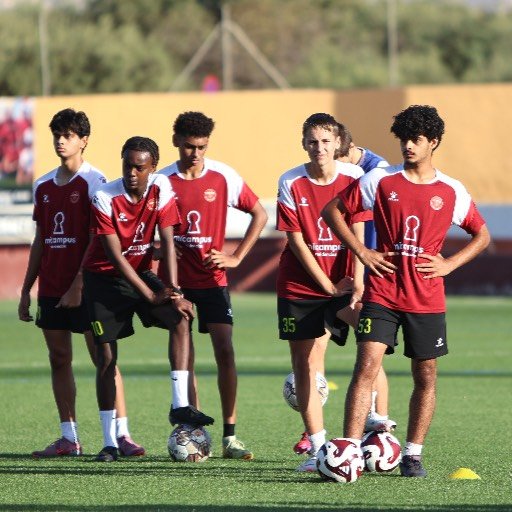
- We offer a high performance routine with 7 to 8 sessions each week and a structured environment for training, learning and feedback.
- There’s a clear path built around real matches and trial opportunities, not just training.
- Our residential setup is made for athletes, so you can have a steady routine instead of dealing with chaos.
- We show that real results are possible when the environment is right by sharing examples of players who have moved on to Spanish Clubs, including signings and joining pro teams.
We also have a proven system developed by our parent academy. This means our methods and pathways are well structured, not experimental.
What Makes An Academy The Best Football Academy In Spain?
A great academy is defined by how well it helps its players grow and the real opportunities it provides, not by its logo.
Use this checklist to help you evaluate an academy.
Coaching qualifications + methodology
- Ask if the academy can clearly explain their training model, rather than just running random drills.
- Check if the coaches have recognized licenses. Many clubs follow the UEFA pathway as a standard.
Training intensity + curriculum
- Look for a weekly plan that covers technical, tactical, and physical training, as well as recovery and analysis.
- The best academies help players make steady progress, not just train hard.
Competitive matches + exposure
- Exposure matters most when you play real matches against real opponents.
- Ask how often you will play and who your opponents will be.
Performance monitoring
- A good academy will track your progress using fitness tests, video analysis, and personal feedback.
- If all you hear is ‘good session,’ you will not know how you are really developing.
Player life support (especially internationals)
- Your living situation, nutrition, stability, and guidance matter more than most people think.
- If your life is unstable, your performance will be unstable.
Top Soccer Academies In Spain Ranked By Development Outcomes
Before ranking football academies, it’s important to define what outcome matters most. Otherwise, rankings are just opinions. The best way to compare academies is by looking at their results. For example, club academies often have the most first-team debuts because they are linked to professional teams. High-performance academies are usually better at helping players get international trials or professional chances, since they focus on exposure. Academies that track each player’s progress and focus on long-term development usually outperform short-term camps. If you want both education and football, a good boarding academy can be the best option, as long as the academics are genuine and the daily routine is well managed.
That’s why most online lists of ‘top academies’ aren’t very useful. They often mix club academies that scout players with pay-to-join programs, even though these are quite different. These lists rarely say which age groups each academy suits best, and they almost never help families look at important things like playing time, coaching quality, or how players progress. It’s better to pick an academy based on your own profile, age, passport, and goals, rather than relying on someone else’s ranking.
WANT AN HONEST ANSWER ABOUT YOUR LEVEL?
Send us your age, position, playing history, and footage. We’ll tell you clearly what pathway makes sense in Spain and whether our Murcia programme fits your stage.
Apply for evaluation
Best Youth Academies In Spain For Long-Term Football Education
Spain is an excellent place to learn football because youth training there emphasizes understanding the game instead of only running and pressing.
Spain’s youth football philosophy: what it looks like in training
Top Spanish academies usually help players develop these skills:
- Ball control under pressure, such as first touch, receiving, and turning
- Scanning the field and making decisions. What you notice before you get the ball can make a big difference.
- Playing small-sided games gives players more touches and more chances to make decisions each minute. These games also help with timing and positioning habits.
Research shows that small-sided games are a powerful way to develop players. Studies often find these games improve both tactical skills and technical involvement, depending on the format.
What long term development should look like
Long term development is more than just harder sessions or extra hours. It requires a smarter approach with clear goals for each age group, a steady and logical increase in intensity, regular feedback, and, most importantly, plenty of match time to reinforce training. If a young player trains well but rarely plays in matches, the learning does not fully transfer to real game decisions.
This is where Murcia Football Academy supports long term development. At Murcia Football Academy, progression is not just a hope or a promise, it is a clear structure. The program uses a Spanish approach that focuses on technical and tactical growth, a weekly routine designed for steady progress, and an environment where international players can settle into a stable routine. That last point is more important than many people think. When players feel secure off the pitch with good residential support and daily structure, they develop faster and more consistently on the field.
Best Soccer Academy In Spain And EU For Foreign People?
For players coming from abroad, the best academy is one that combines good football training with a stable daily routine. If you can’t settle in, get enough sleep, eat well, keep a routine, and communicate easily, you won’t perform your best, no matter how good the training is.
When choosing an academy, international players should pay attention to these factors, in this order:
- Match minutes and competition level: You improve most when your training is supported by playing real matches.
- Coaching quality and feedback: Getting clear instructions, corrections, and follow-up matters more than just how intense the sessions are.
- Living setup: The quality of your housing, your distance from training, and the amount of supervision, especially for younger players, all directly affect your performance.
- Education options: These are essential for players under 18 and help keep a healthy balance over time.
- Administrative reality: You need things like visas, paperwork, and support from the academy.
International players need to be realistic about contracts. If you want to sign professionally, you should know the rules that protect young players and manage transfers. According to FIFA Regulations on the Status and Transfer of Players, players under 18 can’t sign a professional contract for more than three years, and international transfers are usually not allowed until you are over 18, except in special cases. This is why it’s risky to choose an academy based only on promises or guarantees. The real question is whether the academy will help you become skilled, sharp, and visible enough for your next step.
Spain is not the only good choice in Europe, but it does have some unique strengths. Spain is known for top tactics, strong competition, and a large football network. Portugal offers good pathways and lots of exposure. The Netherlands is famous for teaching tactics and structured development. Germany and France focus on intensity and physical growth. The UK has a strong football culture, but the process can be more complicated for some international players.
Finally, it’s normal to face challenges when adapting. Most international players feel less confident at first, experience tactical culture shock with new spacing and timing, and need to adjust to changes in communication and daily habits like nutrition and recovery. A good academy does more than motivate you. It creates a stable environment that helps you adapt faster and keep improving over time.
SEE WHAT A FULL RESIDENTIAL PROGRAMME REALLY INCLUDES
“Best academy” only matters if the weekly reality is right: coaching, matches, monitoring, support, and accommodation. Check our programme options and compare them properly.
Compare pricing and options
Best Football Boarding Schools In Spain For Education And Training
A football boarding school, or residential academy, combines several important parts:
- Football training
- Accommodation
- Often education support is all organized into a daily routine.
Many families see this as the safest and most effective option for minors because it creates a stable environment.
Things to think about when choosing a boarding school
A good boarding school should provide:
- Clear safeguarding and supervision
- A routine that protects sleep and recovery
- Nutrition that matches the athlete’s needs
- Practical ways to balance football and schoolwork
Why this setup works well for young players
For young players, having a stable routine is often better than just intense training. Players who sleep well, eat right, go to school, train regularly, and play matches often improve faster than those who only focus on hard training but have a messy routine.
How our residential program works at Murcia Football Academy
Our program is a residential football academy where players live in an athlete-focused environment and follow a structured training routine. The residence offers:
- Athlete designed accommodation
- Daily routine support
- Football focused setup to help you focus on your development.
Types Of Football Academies In Spain And Main Differences
Spain has different types of academy models and each one serves a specific purpose. The biggest challenge is choosing a model that does not match your goal.
Below is a simple comparison:
| Academy type | Best for | Typical entry route | Education / residence | Main risk to watch |
|---|---|---|---|---|
| Club-owned academy | Players aiming for pro pipelines from a young age | Scouting + recruitment | Varies by club | Not realistically accessible for most internationals |
| Private high-performance academy | International & ambitious players needing structure + matches | Application + evaluation | Often available | Overpromising outcomes without a real match plan |
| Boarding / residential academy | Minors needing routine + training + living support | Application + suitability checks | Core feature | Great residence, but weak competition if match calendar is poor |
| Showcase / agency model | Short-term exposure / trial prep | Pay-to-attend or invitation | Rare | “Exposure” without development or consistent minutes |
Why Spain Is The World’s #1 Destination For Football Development
What makes a country the best depends on what you value, but Spain is known as one of the top places for football development. In Spain, football is seen as a mental game as much as a physical one. Players learn to read the game, solve problems, and handle pressure, which helps them build football intelligence early on.
Spain’s football system is built on a strong tactical culture and skilled coaches. Training focuses on making quick decisions, keeping the right position, and using technical skills in small spaces. Coach education is also important. The UEFA pathway, from C to B, A, and Pro licenses, gives clubs and academies a common approach, so players learn the same tactics as they move up.
Another advantage is how competitive Spanish football is. Players use their tactics every week in real games, not just in practice. Many regions have strong leagues with regular, important matches, so players can apply what they learn in real situations.
Spain is well known around the world and gives players strong chances to move forward. Scouts, agents, and clubs pay attention to Spain because it often produces top players and teams. Succeeding in Spain usually brings more attention and respect than in places with fewer connections or less competition, making it a great place for players to advance their careers.
How To Choose The Best Spanish Soccer School For You
The best academy is the one that matches your goals, age, and personal situation, not just the one with the most advertising. Be honest with yourself about what you want. If you aim for a professional contract, look for regular competition, structured development, and real opportunities to be noticed. If your main goal is a scholarship or education, make sure there is a clear academic plan from the beginning, not just promises to arrange it later. If you want to improve your skills or regain confidence, regular match time and focused coaching matter more than showcase events. For a short football experience, choose high-quality sessions and smart match planning instead of just a packed schedule.
When you evaluate an academy, there are important questions every player or family should ask and get clear answers to. Find out how many matches you can expect to play each month and what level of teams you will face. Ask about the coaches, their licences, and their real experience. Make sure you know what a typical training week includes, such as field sessions, gym work, recovery, and video or tactical analysis. Also, ask how your progress will be measured, whether through testing, match analysis, written reports, or one-on-one feedback, instead of just general impressions.
If you are an international player, getting clear information is even more important. Ask what support is available for settling in, like accommodation, daily routines, communication, and help with paperwork. Find out what happens if you get injured and what the medical, recovery, and insurance process involves. Most importantly, ask what results are realistic for your age and position, not just what is promised, but what you can honestly expect based on evidence. Academies that answer these questions clearly are usually much better than those that avoid them.